A performance is more than audio playback
Introductions, requests, applause and conversation between songs are part of a live music experience.
Finally, organisations should review the experience after it has been used. The first session can reveal practical details about room layout, timing, audience behaviour or presenter preparation that are difficult to predict on paper. For “Live music through Feelspace: keeping the performer connected to the audience”, those observations can be used to refine a performance is more than audio playback before the format is repeated or scaled.
Framing matters for musicians
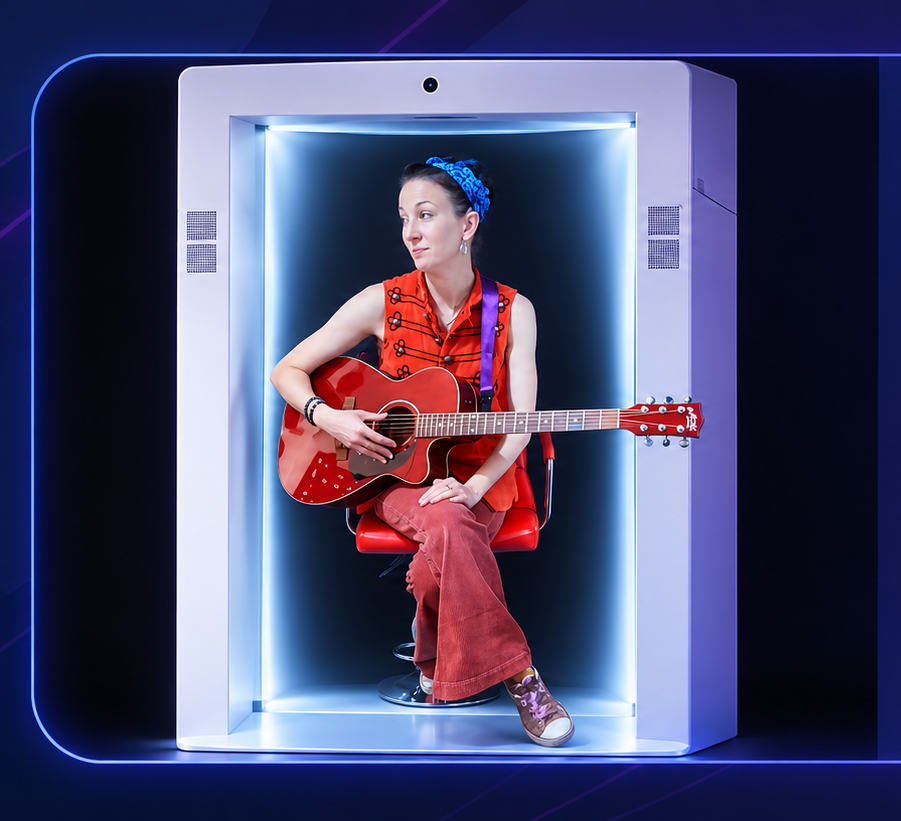
Instruments need to fit comfortably inside the portrait frame, and the performer needs enough camera distance to move naturally.
For Feelspace LIVE, the practical question is not simply whether the technology can support this idea. It is whether the format makes the experience clearer, more useful or more accessible for the people involved. In the context of “Live music through Feelspace: keeping the performer connected to the audience”, that means testing framing matters for musicians against the actual purpose of the session rather than using telepresence for novelty alone.
Audio deserves special attention
Music exposes sound problems quickly, so microphone quality, levels, room speakers and connection stability should be tested with the actual instrument.
The human behaviour around the technology matters just as much as the hardware. People need to know who the remote person is, why they are joining and what kind of interaction is expected. In “Live music through Feelspace: keeping the performer connected to the audience”, good preparation helps the audience focus on the person and the content rather than trying to work out how the system is supposed to be used.
Let the room respond
The performer can invite requests or speak with audience members, which distinguishes LIVE from simply playing a concert recording.
A useful boundary is to compare the Feelspace option with the simpler alternative. If an ordinary video call, recording or in-person visit will do the job just as well, there may be no reason to add another layer. Where let the room respond materially improves the way the remote person can contribute, life-size presentation becomes a more purposeful choice.
Choose live when connection is part of the performance
If the goal is repeatable polished content, pre-recorded may be enough. Choose live when the relationship with the audience matters.
The human behaviour around the technology matters just as much as the hardware. People need to know who the remote person is, why they are joining and what kind of interaction is expected. In “Live music through Feelspace: keeping the performer connected to the audience”, good preparation helps the audience focus on the person and the content rather than trying to work out how the system is supposed to be used.
For music, the technology should carry both the performance and the conversation around it.