
Travel can be a real barrier
Transport, mobility, staff time, fatigue and scheduling can make external appointments or programmes harder to organise.
The human behaviour around the technology matters just as much as the hardware. People need to know who the remote person is, why they are joining and what kind of interaction is expected. In “Reducing travel barriers without pretending distance has disappeared”, good preparation helps the audience focus on the person and the content rather than trying to work out how the system is supposed to be used.
Move the professional instead of the participant
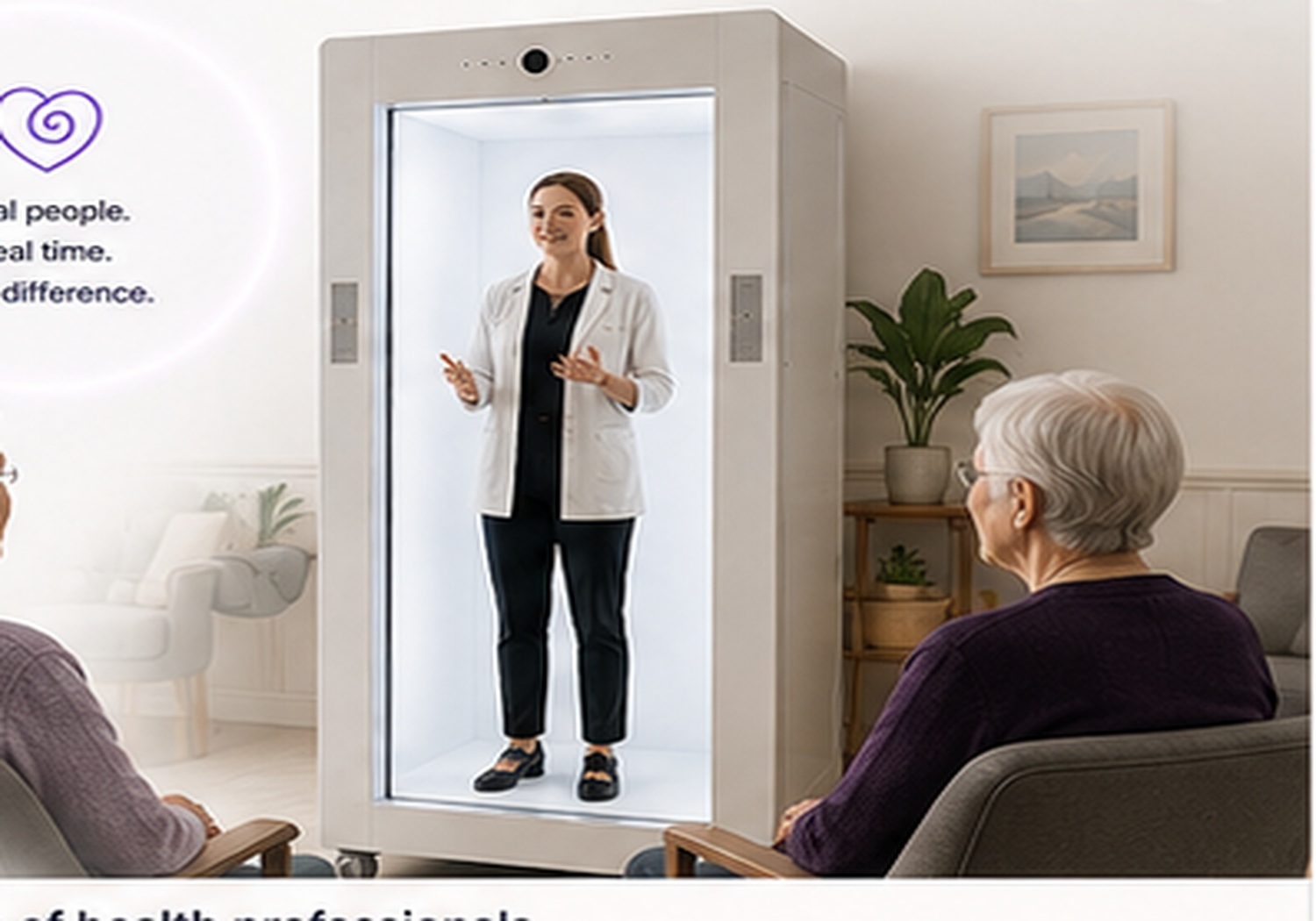
Where remote delivery is appropriate, the professional can appear life-size at the local site while the participant remains in a familiar environment.
Finally, organisations should review the experience after it has been used. The first session can reveal practical details about room layout, timing, audience behaviour or presenter preparation that are difficult to predict on paper. For “Reducing travel barriers without pretending distance has disappeared”, those observations can be used to refine move the professional instead of the participant before the format is repeated or scaled.
Suitability comes first
Convenience should not override professional judgement. Hands-on assessment, emergency care and other activities may still require in-person attendance.
The human behaviour around the technology matters just as much as the hardware. People need to know who the remote person is, why they are joining and what kind of interaction is expected. In “Reducing travel barriers without pretending distance has disappeared”, good preparation helps the audience focus on the person and the content rather than trying to work out how the system is supposed to be used.
Plan the local environment
A quiet space, reliable connection and appropriate local support can make the session more practical and private.
Good use of Feelspace should reduce friction rather than create it. If plan the local environment requires so much explanation or setup that the audience loses sight of the purpose, the design needs simplifying. The strongest version of “Reducing travel barriers without pretending distance has disappeared” is one where the technology supports the flow and then becomes secondary to the person, message or activity.
Treat telepresence as one pathway
In-person, phone, conventional video and life-size telepresence can all have a place depending on the situation.
Preparation becomes easier when the session is broken into roles. The remote person needs to know what they are responsible for, the local host needs to know when to step in, and the audience needs a clear way to participate. Applied to “Reducing travel barriers without pretending distance has disappeared”, that role clarity can make treat telepresence as one pathway feel deliberate rather than improvised.
The value is not that distance disappears. It is that distance does not always have to decide whether an appropriate session can happen.