Avoid ninety minutes of continuous presentation
A life-size facilitator is still a facilitator. Long stretches of talking can reduce participation regardless of how unusual the display looks.
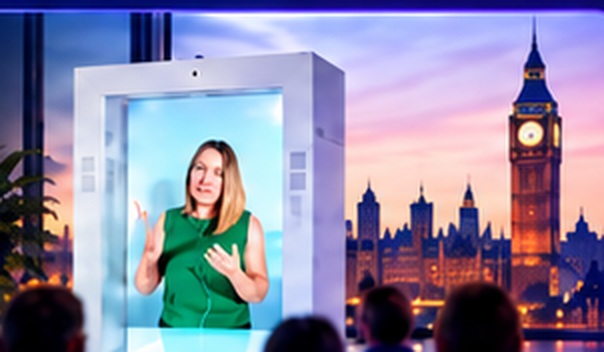
Good use of Feelspace should reduce friction rather than create it. If avoid ninety minutes of continuous presentation requires so much explanation or setup that the audience loses sight of the purpose, the design needs simplifying. The strongest version of “Designing a 90-minute interactive workshop around life-size telepresence” is one where the technology supports the flow and then becomes secondary to the person, message or activity.
Open with purpose and participation
The first part of the session should explain why the group is there, how interaction will work and what participants will be asked to contribute.
There is also a consistency question. If the same idea will be used across several sites, teams or events, organisations should decide which parts must stay standard and which can adapt locally. In Workshops & Retreats, open with purpose and participation can often be designed as a repeatable core with room for genuine local interaction where that adds value.
Alternate input and activity
Short facilitator segments can be followed by local discussion, reflection or practical work. The facilitator can then return to debrief and connect the activity to the wider topic.
For Workshops & Retreats, the practical question is not simply whether the technology can support this idea. It is whether the format makes the experience clearer, more useful or more accessible for the people involved. In the context of “Designing a 90-minute interactive workshop around life-size telepresence”, that means testing alternate input and activity against the actual purpose of the session rather than using telepresence for novelty alone.
Use the local host for transitions
A local host can manage materials, time, microphones and breakout instructions while the remote facilitator remains focused on the group.
A useful boundary is to compare the Feelspace option with the simpler alternative. If an ordinary video call, recording or in-person visit will do the job just as well, there may be no reason to add another layer. Where use the local host for transitions materially improves the way the remote person can contribute, life-size presentation becomes a more purposeful choice.
Finish with application
The final part should help participants identify what they will do next. A workshop should be remembered for useful action rather than for the technology used to deliver it.
This also has an operational side. A strong Feelspace session needs somebody to own the local room, somebody to own the remote contribution and a clear understanding of how the two connect. For “Designing a 90-minute interactive workshop around life-size telepresence”, finish with application should therefore be planned alongside timing, audio, audience participation and the fallback process rather than treated as a separate technical detail.
The best telepresence workshop is still judged by the workshop — participation, relevance and useful next steps.